
Why does a minimalist pixel-art adventure keep you hooked for hours, while a cinematic blockbuster with a massive budget sometimes fades from memory just as quickly? In this deep dive into indie games vs aaa engagement, we unpack the mechanics that fuel player passion on both sides of the industry. From tightly focused design loops and community-driven development to expansive worlds and high-production storytelling, we analyze the strategies and philosophies that make each uniquely compelling. If you’ve ever wondered what truly keeps you playing, this breakdown reveals the psychology, structure, and intent behind today’s most captivating gaming experiences.
Defining the Arena: What Makes an Indie Game “Indie”?
First, let’s clear up a common confusion. “Indie” doesn’t just mean “small.” It refers to independent development—games created without major publisher funding or control. That distinction matters.
On one side, you have AAA titles (pronounced “triple-A”). These are the blockbusters: massive budgets, hundreds of developers, global marketing pushes, and cinematic polish. Think Call of Duty or Assassin’s Creed. Their goal? Broad appeal and high production value (the summer action movie of gaming).
On the other hand, independent games operate more like artisans. Smaller teams, tighter budgets, and far more creative freedom. Games like Stardew Valley, Hades, and Among Us thrive on inventive mechanics and strong community ties.
However, budget alone doesn’t define success. Engagement goes beyond hours played—it includes emotional investment, fan art, Discord debates, and replay value.
That’s where indie games vs aaa engagement becomes interesting. Big spectacle can attract attention, but originality often builds loyalty. Both models work—just in very different ways.
The AAA Engagement Engine: Polish, Progression, and Spectacle
AAA games are meticulously engineered around what designers call a core gameplay loop—the repeatable cycle of actions players perform (fight, loot, upgrade, repeat). When that loop feels smooth and responsive, it becomes deeply satisfying. Add layered progression systems like skill trees (structured upgrade paths that let players specialize abilities), randomized loot drops, and daily quests, and suddenly players aren’t just playing—they’re advancing. Psychologists link this to “operant conditioning,” where variable rewards increase repeated behavior (Skinner, 1953). In other words, the loot chest might as well whisper, “Just one more run.”
At the same time, immersion does heavy lifting. Cutting-edge graphics, spatial audio, and cinematic storytelling create what researchers call presence—the sensation of “being there” in a virtual world (Slater & Wilbur, 1997). When a boss fight explodes in orchestral sound and particle effects, it’s less a level and more a blockbuster moment. However, some argue spectacle masks shallow mechanics. That criticism isn’t baseless. Yet the strongest AAA titles marry polish with depth, ensuring the shine isn’t just surface-level.
Then there’s the live service model. Through seasonal events, rotating challenges, and battle passes (tiered reward tracks unlocked over time), publishers transform a $70 purchase into a long-term ritual. Critics call it manipulative; supporters call it evolving entertainment. Both can be true.
Looking ahead—this is speculation—we may see hybrid models blending indie games vs aaa engagement philosophies: tighter, innovative mechanics wrapped in AAA-level progression ecosystems. If that happens, engagement won’t just be engineered. It’ll be irresistible.
The Indie Engagement Blueprint: Community, Connection, and Creativity
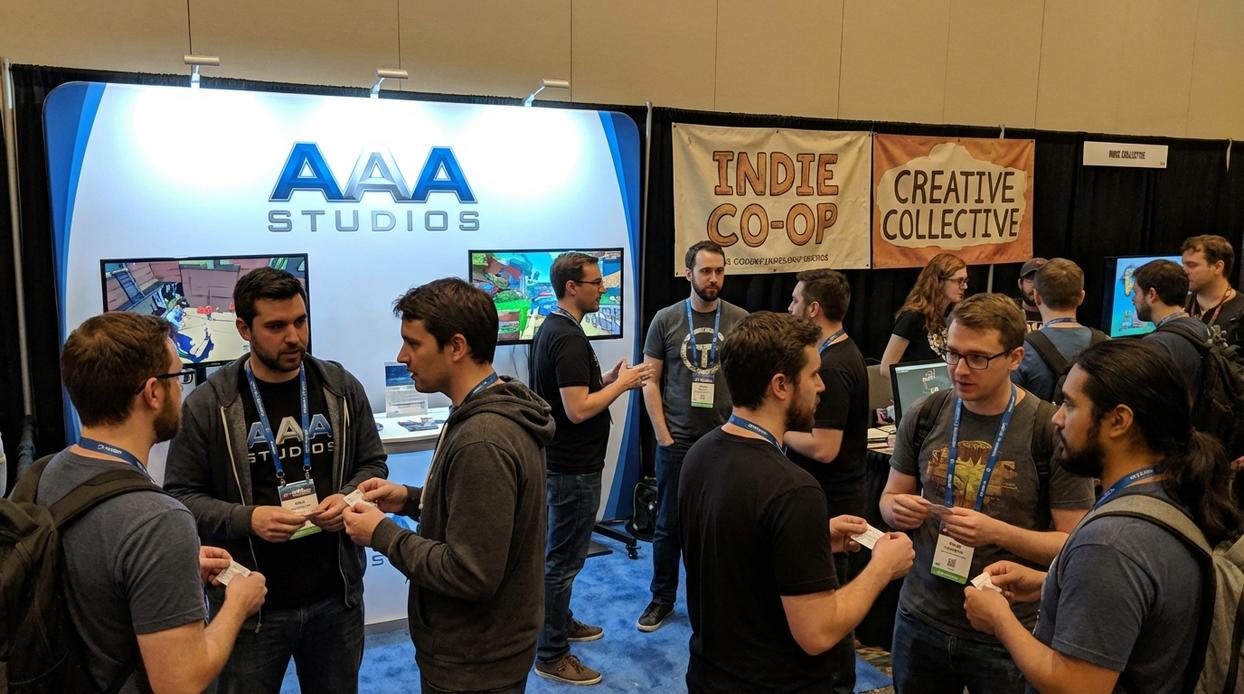
Indie games thrive on innovation as the hook. In other words, they win attention by doing something you simply can’t get anywhere else. Genre-bending mechanics—meaning systems that blend or reinvent established genres—invite players to learn from scratch. Think of time-loop puzzles in Outer Wilds or deck-building roguelikes that redefine strategy. Players don’t just play; they experiment, fail, and try again (sometimes stubbornly at 2 a.m.).
I learned this the hard way. Early on, I underestimated how much novelty matters. I focused on polish over originality—and engagement plateaued. Meanwhile, quirkier titles with rough edges exploded in popularity because they offered something distinct. The lesson? Mastery of a new system is magnetic.
However, innovation alone isn’t enough. The direct developer-to-player pipeline—platforms like Discord and Early Access—turns feedback into fuel. Early Access means releasing a playable version before full launch, allowing community input to shape development. When players see their suggestions implemented, they shift from consumers to collaborators. I once ignored early feedback, assuming the “silent majority” agreed with me. They didn’t. Engagement dipped until I opened communication channels and listened.
Then there’s emergent gameplay and player agency. Emergent gameplay refers to unscripted experiences created by interacting systems. Sandbox titles like Minecraft prove that when players set their own goals, engagement lasts years. It’s the heart of indie games vs aaa engagement debates: freedom versus spectacle.
Critics argue AAA polish guarantees longevity. Sometimes that’s true. Yet creativity plus community often outperforms budget.
Pro tip: build systems, not scripts.
As trends like cloud gaming in 2026 is streaming the future of play reshape access, indies that empower players will keep winning attention.
Where the Lines Blur: When Indies Go Big and AAA Gets Personal
The line between indie and AAA used to be obvious: budget, team size, marketing muscle. Not anymore.
The Rise of “AA” and Premium Indies
Games like Hellblade: Senua’s Sacrifice proved a smaller studio can deliver cinematic storytelling and high-fidelity visuals without a blockbuster budget. “AA” (mid-tier productions with focused scope and polished execution) offers creative risks and premium feel. If you want tight design without filler, start here. (Pro tip: shorter campaigns often mean fewer repetitive mechanics.)
AAA Adopts Indie Tactics
Big studios now prioritize Discord servers, dev diaries, and rapid patches. Community management isn’t optional—it’s retention strategy. Listening loops turn players into advocates, not just customers.
The Breakout Hit Phenomenon
A viral indie can rival a blockbuster launch—think surprise hits that dominate Twitch overnight. Passion scales fast when streamers amplify it.
In the debate over indie games vs aaa engagement, try both—but invest your time where innovation meets responsiveness. That’s the sweet spot.
Choosing Your Next Digital Obsession
You set out to understand what truly separates blockbuster hits from passion projects, and now you can clearly see the contrast between indie games vs aaa engagement. One delivers massive worlds, cutting-edge visuals, and endless systems to master. The other offers creativity, risk-taking, and a closer bond between player and developer.
If you’ve ever felt torn between spectacle and soul, that tension is your real pain point. The right choice comes down to what keeps you logging back in.
Ready to find your next obsession? Explore trending titles, compare player communities, and dive into gameplay breakdowns that match your style. Start playing smarter today.
 Founder & Chief Visionary Officer
Neylora Vassorin has opinions about gamer gear optimization tips. Informed ones, backed by real experience — but opinions nonetheless, and they doesn't try to disguise them as neutral observation. They thinks a lot of what gets written about Gamer Gear Optimization Tips, Esports and Player Perspectives, Geek-Level Gaming Strategies is either too cautious to be useful or too confident to be credible, and they's work tends to sit deliberately in the space between those two failure modes.
Reading Neylora's pieces, you get the sense of someone who has thought about this stuff seriously and arrived at actual conclusions — not just collected a range of perspectives and declined to pick one. That can be uncomfortable when they lands on something you disagree with. It's also why the writing is worth engaging with. Neylora isn't interested in telling people what they want to hear. They is interested in telling them what they actually thinks, with enough reasoning behind it that you can push back if you want to. That kind of intellectual honesty is rarer than it should be.
What Neylora is best at is the moment when a familiar topic reveals something unexpected — when the conventional wisdom turns out to be slightly off, or when a small shift in framing changes everything. They finds those moments consistently, which is why they's work tends to generate real discussion rather than just passive agreement.
Founder & Chief Visionary Officer
Neylora Vassorin has opinions about gamer gear optimization tips. Informed ones, backed by real experience — but opinions nonetheless, and they doesn't try to disguise them as neutral observation. They thinks a lot of what gets written about Gamer Gear Optimization Tips, Esports and Player Perspectives, Geek-Level Gaming Strategies is either too cautious to be useful or too confident to be credible, and they's work tends to sit deliberately in the space between those two failure modes.
Reading Neylora's pieces, you get the sense of someone who has thought about this stuff seriously and arrived at actual conclusions — not just collected a range of perspectives and declined to pick one. That can be uncomfortable when they lands on something you disagree with. It's also why the writing is worth engaging with. Neylora isn't interested in telling people what they want to hear. They is interested in telling them what they actually thinks, with enough reasoning behind it that you can push back if you want to. That kind of intellectual honesty is rarer than it should be.
What Neylora is best at is the moment when a familiar topic reveals something unexpected — when the conventional wisdom turns out to be slightly off, or when a small shift in framing changes everything. They finds those moments consistently, which is why they's work tends to generate real discussion rather than just passive agreement.