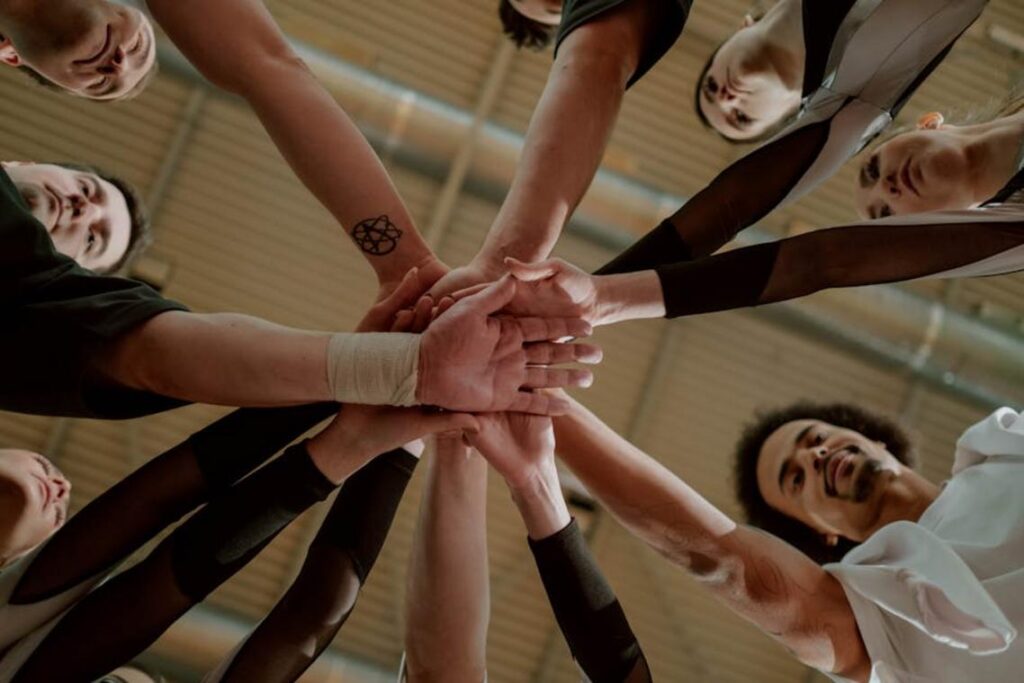

If you’re searching for an edge in esports, you’re likely wondering what truly separates top-tier teams from the rest. The answer often lies beyond raw skill and flashy plays—it’s found in structured, disciplined competitive gaming team routines that shape consistency, communication, and clutch performance.
In this article, we break down the daily habits, practice structures, strategy reviews, and mental conditioning methods that elite teams rely on to stay ahead. You’ll learn how professional squads organize scrims, analyze gameplay footage, optimize roles, and build synergy that holds up under tournament pressure.
To ensure accuracy, we’ve examined tournament footage, analyzed coaching breakdowns, and referenced insights shared by high-level players and analysts across major esports titles. Whether you’re part of an amateur roster or aiming for the pro scene, this guide will show you how structured routines translate directly into measurable in-game results.
From Chaos to Coordination: Building Your Winning Esports Practice Schedule
Most amateur teams think “practice” just means grinding more matches. The result? Burnout, tilted comms, and the same mistakes on repeat. Unstructured reps don’t build champions—they hardwire bad habits. That’s the fastest way to lose.
The upside of doing this right is massive. A goal-driven schedule turns every hour into measurable progress: sharper mechanics, cleaner rotations, tighter team synergy. Instead of guessing, you fix specific weaknesses.
This guide breaks down competitive gaming team routines and shows you how to structure drills, VOD reviews, and scrims with purpose—so you improve faster, argue less, and win more.
Before you open a calendar, define the outcome. A schedule without objectives is just empty time slots. In esports, the “why” drives the “how.” If your aim is winning a regional qualifier or mastering a new composition, every drill must connect to that result.
That’s where SMART goals come in. SMART stands for Specific, Measurable, Achievable, Relevant, and Time-bound. Specific means clear and focused. Measurable means you can track progress with data. Achievable keeps the target realistic. Relevant ties it to team priorities. Time-bound adds a deadline. For example, “Improve our attack-side win rate on Ascent from 40% to 55% over four weeks.”
Next, clarify availability. A realistic, shared calendar prevents constant rescheduling. Consistency builds momentum (and excuses kill it). Agree on absence rules so practice continues smoothly. Pro tip: set reminders and confirm attendance 24 hours prior.
Finally, define Core Practice Hours. These are mandatory blocks reserved for strategy, review, and scrims. Optional sessions support individual growth but never replace them. This structure mirrors competitive gaming team routines and reduces confusion about expectations. When goals and availability align, your blueprint turns effort into measurable progress. Clarity first, mechanics second, results follow with disciplined repetition and honest communication daily.
The Anatomy of an Elite Practice Block
Great teams don’t just grind—they structure improvement. What separates average rosters from contenders isn’t raw hours logged; it’s how those hours are designed. Research on deliberate practice shows that focused, feedback-driven sessions outperform mindless repetition (Ericsson et al., 1993). In other words, intention beats volume every time.
Phase 1: Individual Warm-up & Mechanical Drills (30 Minutes)
First, isolate mechanics. This isn’t team time—it’s neural activation. Aim trainers, movement drills, and character-specific combos sharpen reaction speed and consistency. Studies on motor learning show that short, high-focus repetitions improve performance retention more than unstructured play (Schmidt & Lee, Motor Control and Learning).
For example, many Tier 1 FPS pros spend 20–40 minutes in aim trainers before scrims to stabilize flick accuracy and tracking consistency. Consequently, when scrims begin, everyone is mechanically “online” (and not blaming cold hands for missed shots).
Phase 2: Pre-Scrim Strategy & VOD Review (45 Minutes)
Next, analyze before you execute. Review your previous VOD—or better yet, a pro team’s footage—to identify one or two correctable mistakes. Keep it singular. Cognitive overload reduces performance under pressure (American Psychological Association).
For instance: “Today, our entire focus is on coordinated rotations and trade-fragging.” That’s measurable. That’s coachable. And most importantly, it aligns the team.
This is where competitive gaming team routines separate disciplined squads from ranked-stack chaos.
Phase 3: Purposeful Scrimmages (2 Hours)
Now comes implementation. However, don’t just play to win. Play to execute the day’s objective. Run controlled scenarios—30 minutes of site retakes, for example—before full best-of-3 matches.
Data from traditional sports shows constraint-based training improves decision-making speed under pressure (Davids et al., 2008). Esports mirrors this: controlled repetition sharpens coordination far faster than unstructured matches.
Yes, some argue that “real” games are the only true test. Fair—but without focused reps, mistakes fossilize into habits (and bad habits are stubborn).
Phase 4: Cool-down & Actionable Debrief (15 Minutes)
Finally, debrief immediately. Identify what improved relative to the objective and define one action item for next time. Teams that conduct structured post-performance reviews show higher long-term adaptation rates (Harvard Business Review, 2011).
Additionally, short reflections reduce emotional carryover, which directly impacts performance sustainability and ties closely to mental health in esports managing pressure and burnout.
In the end, elite practice blocks aren’t glamorous. They’re intentional, evidence-backed, and relentlessly focused. That’s how progress compounds.
Beyond the Scrims: Asynchronous and Individual Growth

Team practice is for coordination. Individual mastery? That’s on you.
As one coach bluntly told his roster, “Scrims fix teamwork. Ranked fixes you.” In other words, mandatory individual practice isn’t optional—it’s the baseline. Players should commit to a set number of ranked games each week, each with a defined improvement goal: better wave control, tighter crosshair placement, faster ult tracking. Without that focus, you’re just grinding (and grinding mindlessly is how bad habits fossilize).
Then there’s the power of POV reviews. Record your games. Rewatch them. Pause at every death and ask, “Where was I standing? What information did I ignore?” Look for positioning errors, poor decision-making, and missed opportunities. Bring one key finding to the next team meeting. As one veteran player put it, “If you can’t explain your mistake, you’ll repeat it.” That single insight often sparks broader improvements across competitive gaming team routines.
Meanwhile, schedule a separate weekly theorycrafting block. Short. Intentional. Watch pro VODs together. Debate meta shifts. “Why are top teams drafting double flex here?” someone asks. Another replies, “Because tempo matters more than scaling this patch.” These discussions keep your playbook fresh instead of predictable.
Finally, don’t ignore mental and physical optimization. Proper sleep improves reaction time and cognitive processing (Walker, 2017). Managing tilt preserves communication clarity. As one IGL said after a loss, “We didn’t lose to mechanics—we lost to frustration.”
Skill is personal. Growth is deliberate. Scrims are only the beginning.
Consistency Is Your Ultimate Power-Up
Talent might win you a flashy round, but CONSISTENCY wins championships (just ask any Seoul Valorant bootcamp grinding 12-hour blocks). The real gap between good and great isn’t mechanics—it’s discipline. Structured reps beat raw aim.
Warm-up
Review
Scrim
Debrief
These competitive gaming team routines create feedback loops that sharpen macro play, tighten comms, and reduce tilt. Some argue rigid structure kills creativity. In reality, constraints build clutch instincts (think T1’s scrim culture).
• Schedule goal-based blocks
• Hold every player accountable
Start small: add a 15-minute post-scrim debrief this week. That habit is the FOUNDATION of a winning culture.
Level Up Your Competitive Edge
You came here to understand what truly separates casual players from elite competitors. Now you’ve seen how structure, mindset, mechanics, and preparation all come together to create consistent high-level performance.
The biggest frustration for most players isn’t a lack of passion—it’s inconsistency. Missed shots. Poor communication. Burnout. Stalled progress. That’s exactly why structured practice, smarter reviews, and optimized setups matter so much. Without a system, improvement is random. With the right approach, it’s inevitable.
If you’re serious about climbing ranks, refining mechanics, and mastering competitive gaming team routines, the next step is simple: start implementing one structured change today. Review your last match. Adjust your warm-up. Optimize your gear. Build a repeatable routine.
Thousands of competitive players trust our in-depth breakdowns, meta analyses, and gear optimization insights to sharpen their edge. If you’re ready to stop guessing and start improving with proven strategies, dive into our latest guides now and level up with purpose.
 Founder & Chief Visionary Officer
Neylora Vassorin has opinions about gamer gear optimization tips. Informed ones, backed by real experience — but opinions nonetheless, and they doesn't try to disguise them as neutral observation. They thinks a lot of what gets written about Gamer Gear Optimization Tips, Esports and Player Perspectives, Geek-Level Gaming Strategies is either too cautious to be useful or too confident to be credible, and they's work tends to sit deliberately in the space between those two failure modes.
Reading Neylora's pieces, you get the sense of someone who has thought about this stuff seriously and arrived at actual conclusions — not just collected a range of perspectives and declined to pick one. That can be uncomfortable when they lands on something you disagree with. It's also why the writing is worth engaging with. Neylora isn't interested in telling people what they want to hear. They is interested in telling them what they actually thinks, with enough reasoning behind it that you can push back if you want to. That kind of intellectual honesty is rarer than it should be.
What Neylora is best at is the moment when a familiar topic reveals something unexpected — when the conventional wisdom turns out to be slightly off, or when a small shift in framing changes everything. They finds those moments consistently, which is why they's work tends to generate real discussion rather than just passive agreement.
Founder & Chief Visionary Officer
Neylora Vassorin has opinions about gamer gear optimization tips. Informed ones, backed by real experience — but opinions nonetheless, and they doesn't try to disguise them as neutral observation. They thinks a lot of what gets written about Gamer Gear Optimization Tips, Esports and Player Perspectives, Geek-Level Gaming Strategies is either too cautious to be useful or too confident to be credible, and they's work tends to sit deliberately in the space between those two failure modes.
Reading Neylora's pieces, you get the sense of someone who has thought about this stuff seriously and arrived at actual conclusions — not just collected a range of perspectives and declined to pick one. That can be uncomfortable when they lands on something you disagree with. It's also why the writing is worth engaging with. Neylora isn't interested in telling people what they want to hear. They is interested in telling them what they actually thinks, with enough reasoning behind it that you can push back if you want to. That kind of intellectual honesty is rarer than it should be.
What Neylora is best at is the moment when a familiar topic reveals something unexpected — when the conventional wisdom turns out to be slightly off, or when a small shift in framing changes everything. They finds those moments consistently, which is why they's work tends to generate real discussion rather than just passive agreement.