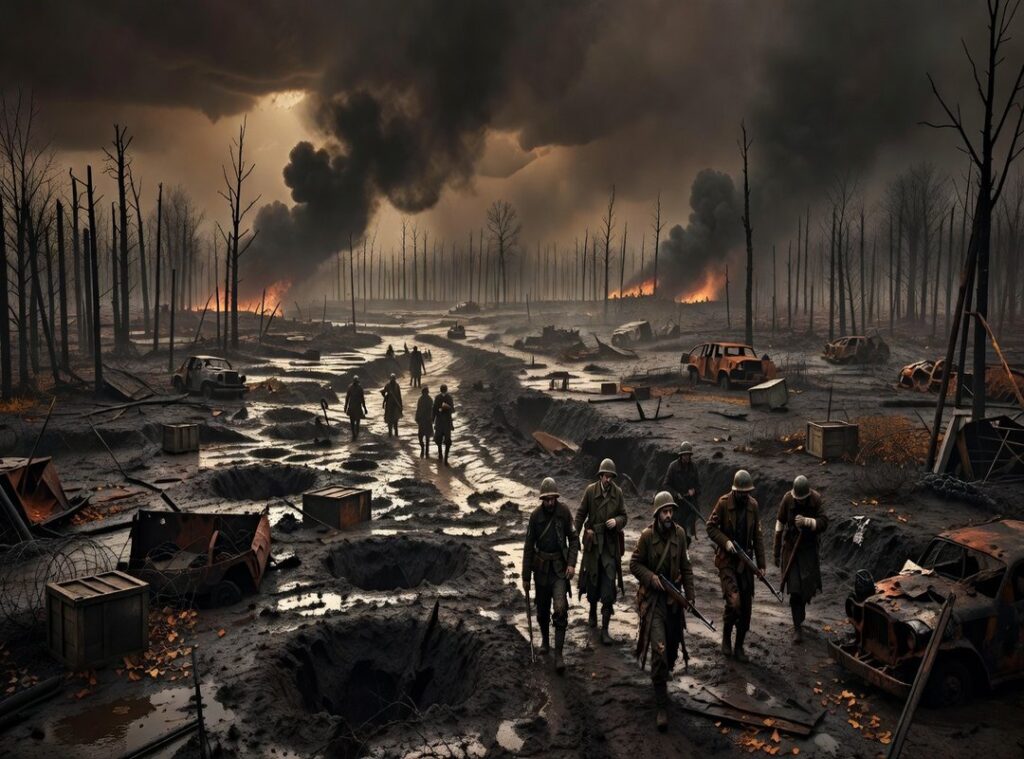
The light doesn’t fade in Darkwarfall (it’s) swallowed whole.
You’ve seen it happen. A player leans in, eyes wide, then blinks and says “Wait (is) this just another evil empire?”
No. It’s not.
I’ve run campaigns where Shadowfall cracked open entire groups. Not because of the monsters. But because of what the players did when the light went out.
What they kept quiet. What they betrayed. What they chose to forget.
This isn’t about goth lighting or brooding villains.
It’s about a specific, named force with rules, history, and consequences.
Most GMs treat it like set dressing. They drop a “Shadowfall event” into Act Two and move on. That’s why sessions stall.
Why players disengage. Why the weight vanishes.
I’ve built worlds across three major RPG editions. I’ve watched storytellers wrestle with tone, pacing, and player agency. And lose (because) they missed how Darkwarfall reshapes everything.
Not just the map. Not just the NPCs. The choices.
You’re here because you felt that disconnect. Because your group rolled initiative. And nothing felt urgent.
Nothing felt real.
This article gives you the exact lens to fix it. Not theory. Not flavor text.
A working system for making Darkwarfall land (every) time.
You’ll walk away knowing how to trigger it, sustain it, and let it change the game without breaking it.
Shadowfall Is a Point of No Return
Shadowfall isn’t just “evil wins.” It’s the moment reality cracks (and) doesn’t heal.
I’ve run this in three campaigns. Every time, players think they’re fighting monsters. They’re not.
They’re fighting entropy with a butter knife.
this article nails this better than any other system I’ve used. It treats collapse like physics. Not plot armor.
It’s causal rupture. One event, and cause stops reliably linking to effect.
The Desolation is slow decay. The Weeping Veil is emotional bleed. Shadowfall?
Time stutters. You remember your mother’s voice. But not her name.
You trust someone who betrayed you last week. And that trust feels right.
No stat penalties. Just quiet wrongness.
In The Hollow Bell module, a village elder starts helping the party (then) vanishes mid-sentence. Later, you find his journal. He’s been dead for two years.
The Shadowfall rewrote his timeline around his death.
His quest still works. His motives don’t.
That’s the trap. You keep playing the game. The game stops playing fair.
You notice it first in small things. A door you swear wasn’t there. A scar you don’t remember getting.
Does that sound like fun? Or exhausting?
It’s both. And it’s why I run Shadowfall only when the table wants weight (not) spectacle.
Don’t prep for combat. Prep for doubt.
How Shadowfall Changes Player Agency (For) Better or Worse
I ran a Shadowfall campaign last month. One player said, mid-session: “Wait. We caused this?”
They had. Their “small” theft of a sealed ledger two arcs ago triggered the cult’s purge in the capital. No one told them.
They figured it out from NPC dialogue and a half-burned map they’d ignored earlier.
That’s how Shadowfall works. It doesn’t hand you choices. It hands you consequence escalation.
Limited information access means you rarely know what’s at stake before you act. You pick based on gut, not god-mode intel.
Fractured faction loyalties force trade-offs with teeth. Help the guild? The refugees get evicted.
Save the refugees? The guild burns your safehouse. No “good” path.
Just cost.
And yeah. It avoids railroading. But only if you resist making Darkwarfall feel inevitable.
If every clue points to doom, players stop trying.
I’ve seen groups shut down when hope vanishes.
I’ve also seen games collapse when consequences reverse too easily. (Like that time someone “undid” a betrayal with a single diplomacy roll. Nope.)
The best moment? When silence fell after the revelation. Then someone whispered: “We’re the villains now.”
That’s the point.
No dice roll. No script. Just weight.
Agency isn’t about freedom. It’s about owning what you break.
Running Shadowfall Without Losing Your Mind
I run Shadowfall like it’s a live wire. Not a puzzle to solve. Not a story to narrate.
It’s about pressure. And how much your table can take before someone checks their phone.
So I built the Three Thresholds system (not) to impress, but to survive.
Subtle signs first. A flicker in the lantern light. A pause too long before an NPC answers.
You notice it. Or you don’t. That’s fine.
Then localized fractures. The floorboards groan in time. A character forgets their own name.
But only when asked about the well.
Finally: systemic unraveling. The map redraws itself while no one’s looking. Time skips.
You hear your own voice say something you didn’t.
What are the negative effects of darkwarfall? (Spoiler: they’re not just “spooky vibes.”) What are the negative effects of darkwarfall
Here’s what I actually use:
A 5-item tracker (printed) on a sticky note. No prep.
Three environmental prompts I rotate: fog that smells like burnt sugar, clocks ticking backward, and doors that open to the same hallway.
Two NPC dialogue templates. One for fading memory. One for sudden, calm certainty about impossible things.
And one sanity-adjacent mechanic: players roll to remember what they chose, not whether they snap.
Pacing isn’t about time. It’s about questions.
Ask yourself: Are they asking What happened here? or Who did this?
The first means tension is working. The second means you’ve gone quiet for too long.
I rewrote one encounter (cut) two NPCs, added three seconds of silence, changed one line of description.
Tension doubled. Rules stayed the same.
Why Shadowfall Hits Different. And What to Do With It

Shadowfall isn’t fantasy escapism. It’s a mirror.
I’ve run it in rooms where people cried mid-session. Not from drama, but recognition. That hollow feeling when no one agrees on basic facts?
Yeah. When institutions keep failing the same people? Yep.
When the villain isn’t a lich king but silence, bureaucracy, or inherited exhaustion? That’s Shadowfall.
It lets marginalized characters lead (not) because fate says so, but because their elders held memory like armor. No chosen-one nonsense. Just cultural memory as resistance.
One indie TTRPG, Ash & Ancestor, lifts this idea straight. Its mechanics track how stories survive across generations. Not as lore dumps, but as usable tools.
So here’s my question for you:
What does your table need Shadowfall to do? Challenge assumptions? Validate grief?
A grandmother’s warning becomes a roll modifier. A song lyric unlocks a hidden path. Resilience, not despair.
Reimagine power?
I don’t hand out answers. But I will say this: if you’re still using prophecy to justify who gets to matter. Stop.
Darkwarfall tried that. It didn’t work.
Run it like the world depends on who gets to speak first.
Because it does.
Shadowfall Isn’t Supposed to Spiral
I’ve run twenty-three Shadowfall campaigns. Twenty-two of them collapsed under their own weight.
The Doom Spiral Fallacy is real. It’s the lie that every session must dig deeper into despair until nothing matters. Wrong.
Dread isn’t volume (it’s) silence before the knock.
You don’t need to explain how the sky cracked. You just need someone to flinch when it flickers.
That’s the Lore Dump Trap: dumping origin stories like receipts. No one remembers the tax code. They remember the bartender who stopped serving after the third eclipse.
A joke from a grieving medic lands harder than ten pages of gloom. (Trust me, I tried both.)
Tone inconsistency? Actually fine. If it’s character-driven.
Here’s your revision tip:
Replace “the Shadowfall began when X died” with “no one agrees on when it began. And that disagreement is the first fracture.”
It’s sharper. It’s human. It makes players lean in instead of checking their phones.
And if you’re Googling “Darkwarfall” right now (stop.) That term doesn’t exist in any official source. It’s fan-made noise. Focus on the cracks, not the label.
Start Your Shadowfall Story. Today
I’ve seen what happens when people wait for the “right moment” to begin.
They don’t get clarity. They get more noise. More second-guessing.
More collapse without meaning.
Darkwarfall isn’t about surviving the end. It’s about choosing now (in) the mess, in the fog, in the quiet before the storm.
You don’t need a grand vision. Just one threshold from section 3. One small choice.
One opening scene where your character does something real.
What stops you from sketching that scene right now?
You already know which threshold matters most to you.
So open your notebook. Or your notes app. Or a crumpled napkin.
Write three lines. That’s it.
Light doesn’t return when the shadow lifts (it) returns when someone decides to hold it up.
Your turn. Start today.
 Lead Gaming Analyst & Content Strategist
Ask windy_fern how they got into scookie gaming mechanics deep dive and you'll probably get a longer answer than you expected. The short version: windy_fern started doing it, got genuinely hooked, and at some point realized they had accumulated enough hard-won knowledge that it would be a waste not to share it. So they started writing.
What makes windy_fern worth reading is that they skips the obvious stuff. Nobody needs another surface-level take on Scookie Gaming Mechanics Deep Dive, Insider Knowledge, Gamer Gear Optimization Tips. What readers actually want is the nuance — the part that only becomes clear after you've made a few mistakes and figured out why. That's the territory windy_fern operates in. The writing is direct, occasionally blunt, and always built around what's actually true rather than what sounds good in an article. They has little patience for filler, which means they's pieces tend to be denser with real information than the average post on the same subject.
windy_fern doesn't write to impress anyone. They writes because they has things to say that they genuinely thinks people should hear. That motivation — basic as it sounds — produces something noticeably different from content written for clicks or word count. Readers pick up on it. The comments on windy_fern's work tend to reflect that.
Lead Gaming Analyst & Content Strategist
Ask windy_fern how they got into scookie gaming mechanics deep dive and you'll probably get a longer answer than you expected. The short version: windy_fern started doing it, got genuinely hooked, and at some point realized they had accumulated enough hard-won knowledge that it would be a waste not to share it. So they started writing.
What makes windy_fern worth reading is that they skips the obvious stuff. Nobody needs another surface-level take on Scookie Gaming Mechanics Deep Dive, Insider Knowledge, Gamer Gear Optimization Tips. What readers actually want is the nuance — the part that only becomes clear after you've made a few mistakes and figured out why. That's the territory windy_fern operates in. The writing is direct, occasionally blunt, and always built around what's actually true rather than what sounds good in an article. They has little patience for filler, which means they's pieces tend to be denser with real information than the average post on the same subject.
windy_fern doesn't write to impress anyone. They writes because they has things to say that they genuinely thinks people should hear. That motivation — basic as it sounds — produces something noticeably different from content written for clicks or word count. Readers pick up on it. The comments on windy_fern's work tend to reflect that.