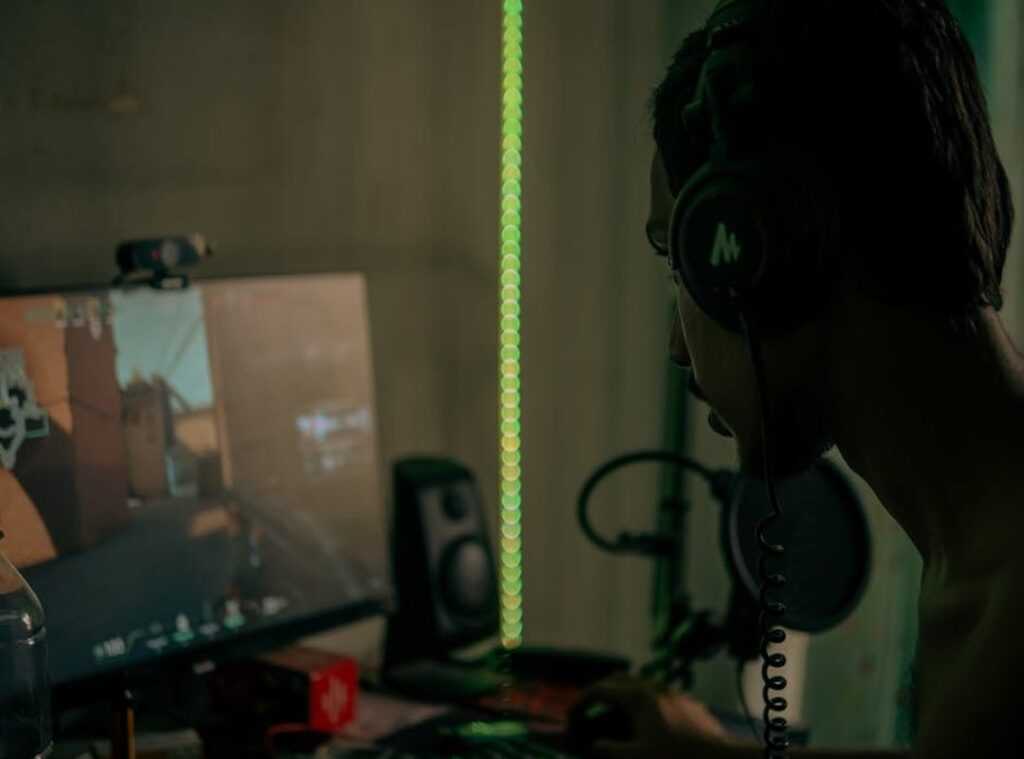

Formula 1 games have always been a go-to for fans who want to feel closer to the sport. They offer a chance to step into the driver’s seat, take on iconic tracks, and compete in one of the most exciting forms of motorsport. In the early days, playing these games meant mastering 8-bit visuals and using a joystick to keep a small, vibrating car on track.
That experience has grown into something much bigger. Today, it’s a high-stakes simulation. While some players still enjoy the simplicity of arcade-style racing, others are drawn to the depth and detail of modern sims, showing just how much F1 gaming has expanded over time.
From “Car Control” to Full Race Engineering
Classic racing games were built around one main skill: keeping the car on the track. Players focused on steering, braking, and finding the right racing line, with success depending mostly on timing and reflexes. The experience felt simple, fast, and easy to understand.
Modern F1 games go far beyond basic control. Players now manage systems during a race, including engine modes, ERS usage, and fuel levels, all while maintaining speed and precision. Driving skill still matters, but smart decisions now play an equally important role in winning races.
The Rise of the “Driver Lifestyle”
Earlier F1 games were mostly about racing and little else. Players once moved from one race to the next with little focus on life outside the track, such as team interactions or media moments. Modern F1 games, on the other hand, offer a more complete view of what it means to be a driver, where both on-track performance and off-track decisions shape the journey. Driving skill still matters, but smart decisions now play an equally important role in winning races.
Players can better understand this balance by following real-world F1 insights. Platforms like FanDuel provide important information about the sport. Fans can review FanDuel Formula 1 odds to gauge team strength, driver form, and expected race outcomes before the lights go out. In games, players can even choose to drive for the current favorite team, giving them a taste of the pressure that comes with being expected to win.
Visual Fidelity
Classic F1 games used simple visuals that focused on function over realism. Cars were often blocky, tracks looked flat, and details were minimal, but everything was clear and easy to follow at high speed. The experience relied on smooth gameplay and imagination rather than visual accuracy.
Modern F1 games take a completely different approach by aiming for near-real-world visuals. Players now see highly detailed car models, dynamic lighting, realistic reflections, and laser-scanned track recreations. The overall presentation feels closer to a live race broadcast, making each lap more immersive and visually convincing.
Raw Feel vs Scientific Accuracy
Classic F1 games focused on delivering a driving experience that felt immediate and responsive. Cars reacted quickly to inputs, sometimes in exaggerated ways, which made them fun and easy to control. The goal was to create a sense of speed and excitement rather than perfect realism.
Modern games aim for a more accurate representation of how cars behave on track. Instead of relying on simplified handling, they simulate real-world systems that affect performance, such as:
- Suspension movement and how the car reacts over curbs,
- Tire wear, grip levels, and temperature changes,
- Weight distribution and how it shifts during braking and acceleration.
Driving now feels more grounded and technical, requiring players to understand how the car behaves in different situations. The experience becomes less about quick reactions alone and more about adapting to realistic physics.
From Couch Play to Global Competition
Multiplayer racing used to be a shared, local experience where players gathered around arcade machines or consoles to compete side by side. Split-screen races created a social and immediate kind of competition, where reactions and rivalries played out in the same room. The focus was on fun and direct interaction rather than long-term progression.
Modern F1 games have expanded multiplayer into a global experience, allowing players to race against others from anywhere at any time. Features like ranked matchmaking, organized online leagues, and official esports competitions tied to Formula 1 have added structure and higher stakes to competitive play. Racing games are no longer just casual experiences but have grown into platforms where skill, consistency, and strategy can lead to real recognition.
A New Kind of F1 Experience
F1 games today offer a different kind of experience, but that does not diminish what made classic titles enjoyable. Older games delivered simple, fast-paced racing that was easy to pick up and fun to play, especially with friends.
Modern games bring more depth and realism, asking players to think as much as they drive. Both styles offer something valuable, depending on what kind of experience a player is looking for. In the end, F1 gaming continues to grow while retaining the elements that made it popular in the first place.
 Esports & Community Insights Editor
Karins Langisonz has opinions about scookie gaming mechanics deep dive. Informed ones, backed by real experience — but opinions nonetheless, and they doesn't try to disguise them as neutral observation. They thinks a lot of what gets written about Scookie Gaming Mechanics Deep Dive, Geek-Level Gaming Strategies, Gamer Gear Optimization Tips is either too cautious to be useful or too confident to be credible, and they's work tends to sit deliberately in the space between those two failure modes.
Reading Karins's pieces, you get the sense of someone who has thought about this stuff seriously and arrived at actual conclusions — not just collected a range of perspectives and declined to pick one. That can be uncomfortable when they lands on something you disagree with. It's also why the writing is worth engaging with. Karins isn't interested in telling people what they want to hear. They is interested in telling them what they actually thinks, with enough reasoning behind it that you can push back if you want to. That kind of intellectual honesty is rarer than it should be.
What Karins is best at is the moment when a familiar topic reveals something unexpected — when the conventional wisdom turns out to be slightly off, or when a small shift in framing changes everything. They finds those moments consistently, which is why they's work tends to generate real discussion rather than just passive agreement.
Esports & Community Insights Editor
Karins Langisonz has opinions about scookie gaming mechanics deep dive. Informed ones, backed by real experience — but opinions nonetheless, and they doesn't try to disguise them as neutral observation. They thinks a lot of what gets written about Scookie Gaming Mechanics Deep Dive, Geek-Level Gaming Strategies, Gamer Gear Optimization Tips is either too cautious to be useful or too confident to be credible, and they's work tends to sit deliberately in the space between those two failure modes.
Reading Karins's pieces, you get the sense of someone who has thought about this stuff seriously and arrived at actual conclusions — not just collected a range of perspectives and declined to pick one. That can be uncomfortable when they lands on something you disagree with. It's also why the writing is worth engaging with. Karins isn't interested in telling people what they want to hear. They is interested in telling them what they actually thinks, with enough reasoning behind it that you can push back if you want to. That kind of intellectual honesty is rarer than it should be.
What Karins is best at is the moment when a familiar topic reveals something unexpected — when the conventional wisdom turns out to be slightly off, or when a small shift in framing changes everything. They finds those moments consistently, which is why they's work tends to generate real discussion rather than just passive agreement.