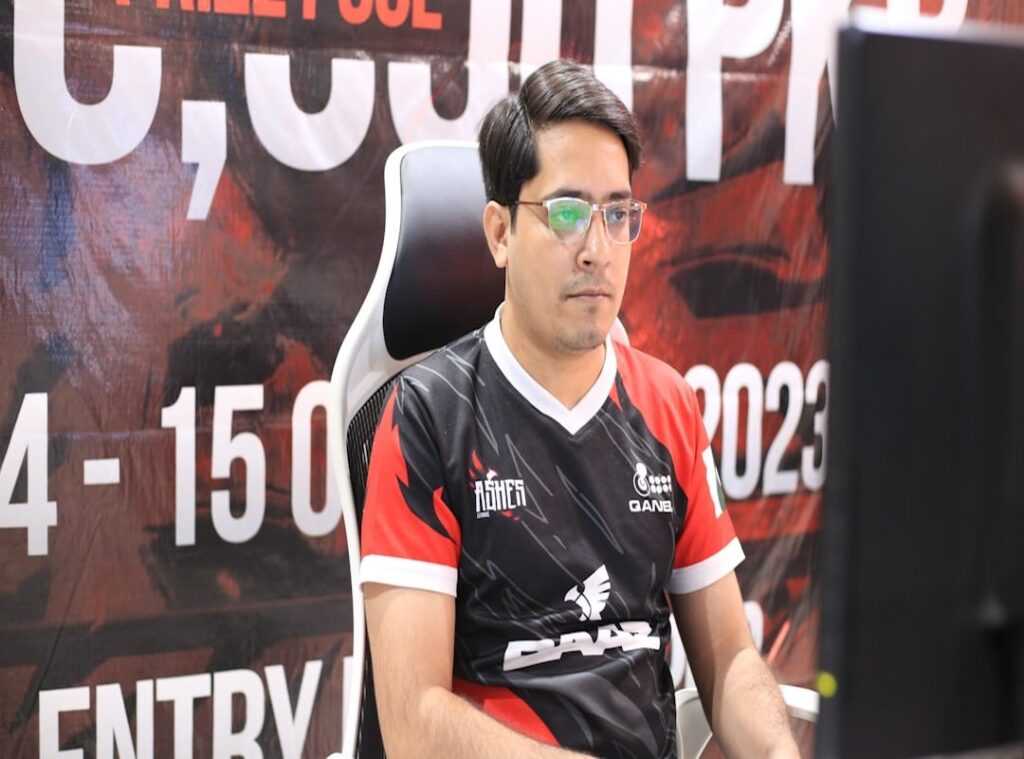
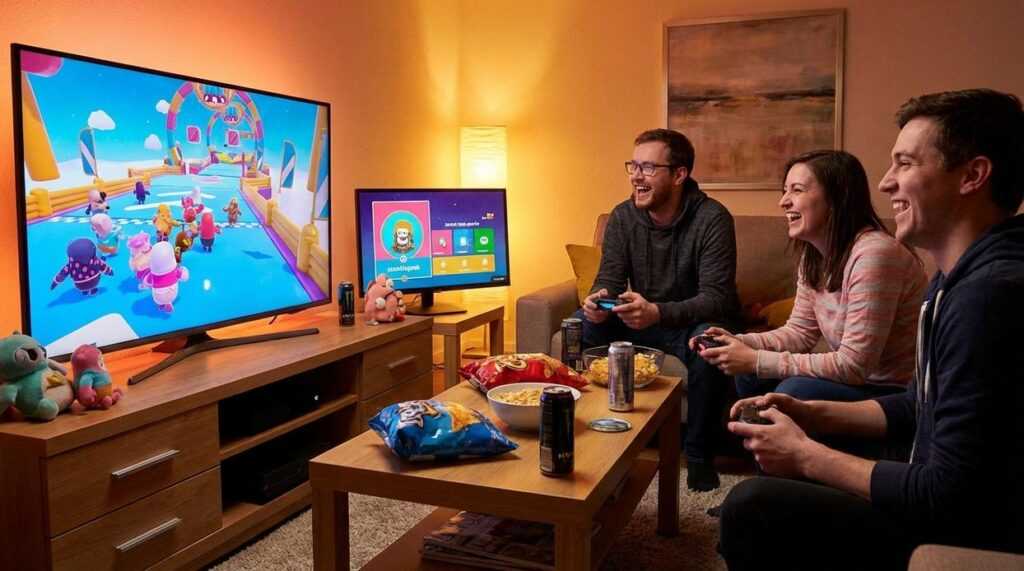
I’ve spent years breaking down why certain games hook us while others fall flat after an hour.
You probably know gaming is fun. But do you actually understand why? Most people can’t explain what keeps them coming back to the same game for hundreds of hours.
Here’s the thing: it’s not just about graphics or storylines. The real magic happens in layers most players never consciously notice.
I’ve analyzed everything from competitive esports mechanics to the tiny dopamine triggers built into progression systems. I’ve optimized gameplay strategies and watched how top players interact with games differently than casual ones.
This article digs into the actual reasons gaming grabs you. The psychology behind it. The mechanical elements that create flow states. The social dynamics that turn a solo activity into something bigger.
Why gaming is fun isn’t a simple answer. It’s a mix of challenge systems, mastery curves, and connection points that games use to keep you engaged.
I’ll show you the specific elements that make gaming rewarding. Not the surface stuff everyone talks about. The real mechanics underneath.
You’ll walk away understanding what you’re actually responding to when a game clicks. And that means you’ll know exactly what to look for in your next favorite game.
The Mastery Engine: How Progression and Challenge Create Satisfaction
You know that feeling when you finally nail something you’ve been practicing for hours?
That’s not an accident.
Games tap into something deep in how our brains work. It’s called the core loop, and it goes like this: you face a challenge, you take action, you get a reward. Then it starts over.
Simple, right?
But here’s where it gets interesting. Not all progression feels the same.
Think about grinding levels in an RPG versus learning to counter-strafe in VALORANT. One is just putting in time. The other is actually getting better at something that requires real skill.
Both feel good. But they’re completely different types of satisfaction.
When you grind, you’re watching numbers go up. Your character hits level 50, you unlock a new ability, you move to the next zone. It works because our brains love seeing progress bars fill up (even when we know it’s basically just showing up).
But mastering a mechanic? That’s different.
Take wave management in League of Legends. When you first hear about it, it sounds boring. You’re just deciding when to kill minions. But once you understand how freezing a wave near your tower denies your opponent gold and experience while keeping you safe, something clicks.
You’re not just playing the game anymore. You’re playing it better.
That’s why gaming is fun Scookiegeek. The best games give you both types of progression. You level up your character while you level up yourself.
And that difficulty curve? When a game nails it, you barely notice you’ve been playing for three hours.
Each challenge feels just hard enough that beating it matters. The reward comes at exactly the right moment to make you think “okay, just one more match.”
Before you know it, it’s 2 AM and you’re telling yourself the same lie we all tell ourselves.
Just one more.
Achieving Flow State: The Psychology of Total Immersion
You know that feeling when you’re so locked into a game that three hours pass like thirty minutes? In those moments when you’re so absorbed in gameplay that three hours fly by like thirty minutes, you can’t help but feel like a true Scookiegeek, lost in a world where every challenge ignites your passion for adventure. In those exhilarating moments when the game world envelops you so completely that time becomes irrelevant, you truly embrace your inner Scookiegeek, reveling in every challenge and triumph along the way.
That’s flow state. And it’s not just some gaming buzzword.
What is Flow?
Flow is when you’re completely absorbed in what you’re doing. Your mind isn’t wandering. You’re not checking your phone. You’re just… there.
In gaming, it’s that sweet spot where everything clicks. Your reactions feel instant. Your decisions feel right. The game stops being something you’re playing and becomes something you’re experiencing.
Time disappears. Distractions fade out.
The Conditions for Flow New Game Updates Scookiegeek is where I take this idea even further.
Flow doesn’t just happen randomly. You need three things working together.
First, you need a clear goal. Know what you’re trying to do. Beat this boss. Win this match. Hit this combo.
Second, you need immediate feedback. The game has to tell you right away if you’re succeeding or failing. Good games do this naturally through sound cues, visual effects, and score changes.
Third (and this is the tricky one), you need the right balance between your skill and the game’s challenge. Too easy? You get bored. Too hard? You get frustrated.
When these three line up, that’s when flow happens.
Gear Optimization’s Role
Here’s where your setup matters more than you think.
I’m not saying you need a $3000 rig to enjoy games. But technical problems kill flow instantly. Input lag yanks you out of the zone. Screen tearing breaks your focus. A mouse that skips? Forget about it.
This is why gaming is fun scookiegeek covers gear so much. High refresh rate monitors give you smoother visuals. Low-latency peripherals mean your actions register the moment you make them.
When your hardware works right, you stop thinking about it. And that’s the point.
Examples in Action
Flow looks different depending on what you’re playing.
Take a rhythm game like Beat Saber. Flow there is pure reaction. Your body moves before your brain catches up. The music carries you through. Miss a beat and you feel it immediately, but when you’re in the zone, your arms are already swinging to blocks you haven’t consciously seen yet.
Now compare that to something like StarCraft II. Flow in an RTS is strategic. You’re managing your economy, scouting your opponent, planning attacks. But when you hit that state, your hands are executing build orders while your mind is already three moves ahead. Everything flows together.
Same psychological state. Completely different experiences.
That’s what makes flow so interesting. It adapts to whatever you’re doing, as long as the conditions are right.
More Than a Game: The Power of Social Connection and Community
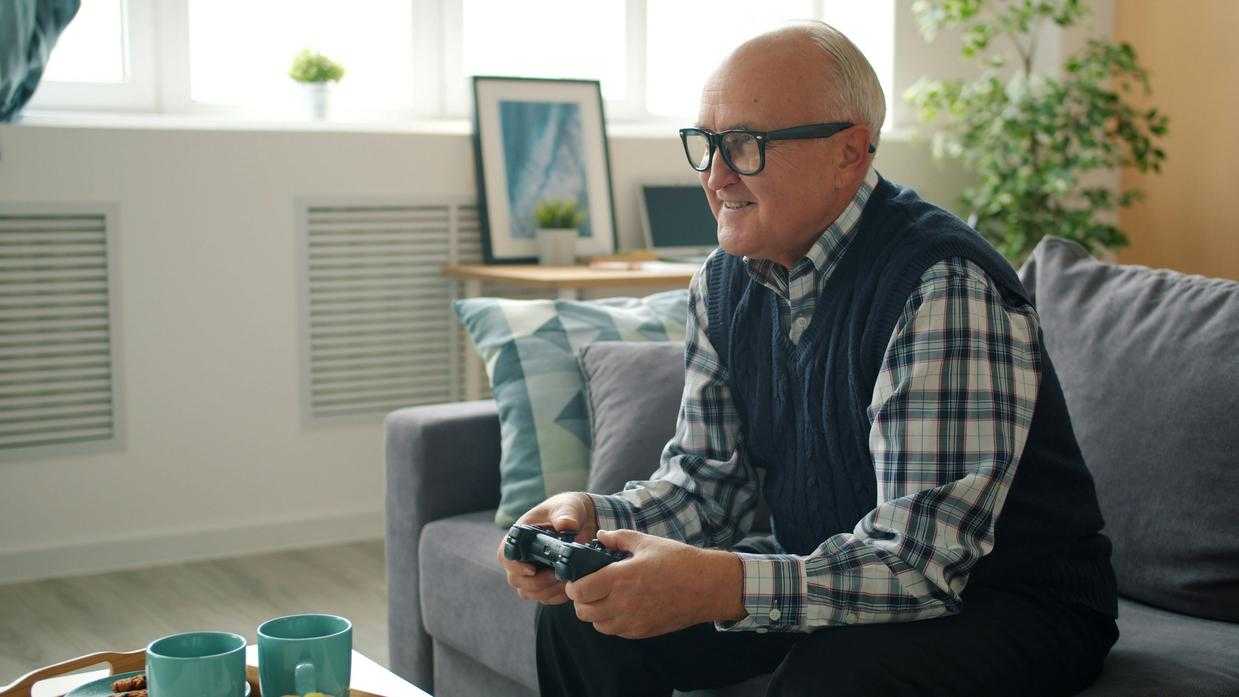
You know that feeling when you pull off a perfect play with your squad?
When everyone’s in sync. When the callouts flow without thinking. When you win a round you had no business winning because your team just clicked.
That’s not luck.
Gaming gives us something most hobbies can’t. A shared language that goes beyond words. A space where strangers become teammates and teammates become friends. In the vibrant world of online multiplayer games, where camaraderie is forged through shared victories and defeats, the insights from Gaming Hacks Scookiegeek can elevate your skills and deepen those invaluable connections with fellow gamers. In the vibrant world of online multiplayer games, where camaraderie is forged through shared victories and defeats, the insights from Gaming Hacks Scookiegeek serve as a bridge that enhances our collective experience and deepens the bonds between players.
Shared Goals, Shared Wins
I’ve been gaming long enough to know this truth. The best moments aren’t when you solo carry. They’re when your whole team contributes to something bigger.
Think of it like a band. Sure, the lead guitarist might get attention. But without the drummer keeping time and the bassist holding down the groove, you just have noise. Co-op gaming works the same way. Everyone plays their part.
Whether you’re running casual raids or grinding ranked matches, that coordination matters. You learn each other’s playstyles. You cover weaknesses. You celebrate wins together (and yeah, you suffer through losses too).
Some people argue that competitive gaming ruins friendships. That the pressure to perform kills the fun.
But I’ve seen the opposite play out more often. Healthy competition pushes you to improve. Those rivalries on the leaderboard? They’re what keep you coming back. They’re what make victory feel earned.
The key is keeping it healthy. When competition becomes toxic, nobody wins.
The Language We Share
Every game creates its own culture. Inside jokes. Memes that make zero sense to outsiders. Moments that become legend in your friend group.
It’s like having a secret handshake, except it’s an entire vocabulary. You mention one phrase and everyone who was there just knows. That’s why gaming news scookiegeek covers these community moments. They matter.
This shared history builds something real. A sense of belonging that extends beyond the screen.
In esports, this goes even deeper. Professional teams live and breathe trust. One player makes a call and four others follow without hesitation. That kind of synergy doesn’t happen overnight. It’s built through hundreds of hours together, learning to read each other’s intentions before they’re even spoken.
That’s the real power here. Games give us a framework for connection that feels natural. You’re not forcing small talk. You’re working toward something together. The friendship builds itself.
The Joy of Discovery: Exploration, Narrative, and Escapism
You know that feeling when you stumble onto a hidden cave in a game and realize there’s an entire story told through scattered notes and environmental details?
That’s what keeps me coming back.
Worlds in a Box
Open worlds work because they let you explore at your own pace. You’re not just following a linear path. You’re poking around corners and finding things the developers tucked away for curious players.
Take something like Elden Ring. The game doesn’t hold your hand. You wander into a ruin and piece together what happened there from item descriptions and crumbling architecture. No cutscene needed.
That’s environmental storytelling at its best. The world itself is the narrative.
Player Agency
Here’s where it gets interesting. When your choices actually matter, you’re not just watching a story unfold. You’re shaping it.
I’m talking about games where picking dialogue option A versus B changes who lives or dies three hours later. Or where siding with one faction locks you out of entire questlines (and you’re okay with that because it feels real).
This is why gaming hacks scookiegeek focuses so much on decision trees and branching paths. Your investment in the story grows when you know you’re steering it.
A Break from Reality
Let’s be honest about escapism for a second.
Sometimes you just need to be someone else for a few hours. A wasteland scavenger. A space explorer. A detective in a noir city.
That mental reset? It’s not avoiding your problems. It’s giving your brain permission to decompress in a controlled environment where the stakes are fictional but the engagement is real. For the full picture, I lay it all out in Which Gaming Pc to Buy Scookiegeek.
Why gaming is fun scookiegeek comes down to this. You get to discover worlds that don’t exist, make choices that matter in those worlds, and step away from your daily grind without apology. In the realm of escapism where every choice can alter the fabric of fantastical narratives, it’s no wonder that avid gamers turn to platforms like Gaming News Scookiegeek to stay updated on the latest adventures awaiting them. In the vibrant tapestry of virtual adventures, the latest updates from Gaming News Scookiegeek remind us why immersing ourselves in these digital realms is not just a pastime, but a gateway to unbounded creativity and thrilling escapism.
Gaming is an Experience, Not Just a Distraction
We’ve covered a lot about why gaming is fun scookiegeek.
It’s not random. Your brain responds to mastery, flow, connection, and discovery. These are the real drivers behind every great gaming session.
When you understand what pulls you in, you can find games that actually satisfy you. No more scrolling through your library for an hour trying to figure out what to play.
Here’s what I want you to try: Next time you boot up a game, pay attention to what hooks you. Is it the challenge? The story? The people you’re playing with?
Once you identify that element, you’ll start seeing patterns in what you enjoy.
You came here wondering why certain games feel so good. Now you know it’s not just escapism. It’s your brain doing what it was designed to do.
Pick up your controller and play with intention. You’ll appreciate the experience on a whole new level.
 Founder & Chief Visionary Officer
Neylora Vassorin has opinions about gamer gear optimization tips. Informed ones, backed by real experience — but opinions nonetheless, and they doesn't try to disguise them as neutral observation. They thinks a lot of what gets written about Gamer Gear Optimization Tips, Esports and Player Perspectives, Geek-Level Gaming Strategies is either too cautious to be useful or too confident to be credible, and they's work tends to sit deliberately in the space between those two failure modes.
Reading Neylora's pieces, you get the sense of someone who has thought about this stuff seriously and arrived at actual conclusions — not just collected a range of perspectives and declined to pick one. That can be uncomfortable when they lands on something you disagree with. It's also why the writing is worth engaging with. Neylora isn't interested in telling people what they want to hear. They is interested in telling them what they actually thinks, with enough reasoning behind it that you can push back if you want to. That kind of intellectual honesty is rarer than it should be.
What Neylora is best at is the moment when a familiar topic reveals something unexpected — when the conventional wisdom turns out to be slightly off, or when a small shift in framing changes everything. They finds those moments consistently, which is why they's work tends to generate real discussion rather than just passive agreement.
Founder & Chief Visionary Officer
Neylora Vassorin has opinions about gamer gear optimization tips. Informed ones, backed by real experience — but opinions nonetheless, and they doesn't try to disguise them as neutral observation. They thinks a lot of what gets written about Gamer Gear Optimization Tips, Esports and Player Perspectives, Geek-Level Gaming Strategies is either too cautious to be useful or too confident to be credible, and they's work tends to sit deliberately in the space between those two failure modes.
Reading Neylora's pieces, you get the sense of someone who has thought about this stuff seriously and arrived at actual conclusions — not just collected a range of perspectives and declined to pick one. That can be uncomfortable when they lands on something you disagree with. It's also why the writing is worth engaging with. Neylora isn't interested in telling people what they want to hear. They is interested in telling them what they actually thinks, with enough reasoning behind it that you can push back if you want to. That kind of intellectual honesty is rarer than it should be.
What Neylora is best at is the moment when a familiar topic reveals something unexpected — when the conventional wisdom turns out to be slightly off, or when a small shift in framing changes everything. They finds those moments consistently, which is why they's work tends to generate real discussion rather than just passive agreement.