I’ve spent years playing games and analyzing what they actually do to my brain.
You’ve probably heard people argue about whether gaming is rotting your mind or making you sharper. Both sides sound confident. But most of them are guessing.
Here’s the thing: we have real research now. Studies that show how gaming affects the brain in specific ways. Not vague claims about attention spans or violence. Actual measurable changes in how your brain processes information.
I dug through the neurological and psychological research to figure out what’s actually happening when you game. What I found surprised me.
This article breaks down the science behind gaming and cognition. I’ll show you which types of games affect which parts of your brain and how.
We’re talking about problem-solving, reaction time, spatial awareness, and memory. The stuff that actually matters when you’re trying to understand if those hours in-game are doing anything beyond entertainment.
No moral panic. No cheerleading. Just what the research shows about how different games challenge and change your cognitive functions.
You’ll walk away knowing exactly what’s happening in your brain when you play.
The Science of Play: How Gaming Rewires Your Brain
Your brain changes every time you play.
I’m not talking about some vague feel-good idea. I mean actual physical changes in how your neurons connect and fire.
Your Brain on Games
Here’s what happens. When you game, your brain builds new pathways through something called neuroplasticity. Think of it like this: your brain is constantly rewiring itself based on what you do. And gaming? It’s one of the most effective ways to trigger that process.
Every time you solve a puzzle or react to an enemy, you’re literally reshaping your neural architecture.
Now, some people say gaming just rots your brain. That it’s mindless entertainment no different from scrolling social media for hours.
But that’s not what the research shows.
The difference comes down to dopamine. Most people think dopamine is just about feeling good. It’s not. Dopamine drives your motivation and learning systems. When you’re working through a tough boss fight or figuring out a strategy, your brain releases dopamine to reinforce those problem-solving patterns.
You’re not just playing. You’re training your brain to learn.
Compare that to watching TV. Passive media doesn’t demand much from you. Your brain stays in receive mode. But gaming? It requires active engagement. You make decisions, adapt to feedback, and solve problems in real time.
That’s how gaming affects the brain Scookiegeek readers should understand.
My advice? Pick games that challenge you. Strategy games, puzzle games, anything that makes you think differently. Your brain will thank you for it.
Cognitive Level-Up: Key Brain Functions Enhanced by Gaming
Look, I’m going to be honest with you.
When people tell me gaming is just a waste of time, I roll my eyes. Because the science says something completely different.
Your brain changes when you game. Not in some vague, feel-good way. In measurable, testable ways that show up in lab studies.
I’ve been gaming for years, and I’ve watched how it affects my own thinking. But what matters more is what researchers have found when they actually look at how gaming affects the brain scookiegeek style (meaning we’re going deep into the mechanics).
Problem-Solving Gets Sharper
Strategy games rewire how you think about problems.
When I’m playing something like Civilization or XCOM, I’m not just clicking buttons. I’m managing resources I don’t have enough of. I’m predicting what my opponent will do three turns from now. I’m adapting my entire plan when something unexpected happens. In the intricate strategies of games like Civilization and XCOM, my mind races with the same fervor as Scookiegeek, meticulously calculating each move while anticipating my opponent’s next play. In the world of turn-based tactics, where every decision can shift the tide of battle, the insights shared by Scookiegeek have transformed my gameplay from mere button-mashing to a masterclass in strategic foresight and resource management.
That’s not entertainment. That’s mental training.
RTS games force you to think in systems. You can’t just focus on one thing. You need to balance economy, military, and tech while your opponent is doing the same thing faster than you.
Complex RPGs do something similar but slower. You’re planning character builds, anticipating boss mechanics, and adjusting strategies based on what works and what doesn’t.
Your brain gets better at this kind of thinking. Period.
Your Spatial Skills Actually Improve
Here’s where it gets interesting.
Studies show that people who play action games and open-world titles have better spatial resolution than non-gamers. They can track more objects at once. They’re better at mental rotation (imagining how objects look from different angles). Their visual acuity is just better.
I notice this when I’m navigating. Gamers I know tend to have a better sense of direction and can visualize spaces more clearly.
It’s not magic. It’s practice. When you’re exploring massive open worlds or tracking enemies in fast-paced shooters, you’re training your brain to process spatial information faster.
You Make Decisions Faster
Action gamers make decisions quicker than non-gamers. And here’s the kicker: they’re usually just as accurate.
Research backs this up. When you’re playing something fast like an FPS or a fighting game, you’re constantly making split-second calls under pressure. Your brain learns to process information and act on it without overthinking.
This ties directly to better attentional control. You get better at focusing on what matters and filtering out what doesn’t.
I’ve felt this in real life. Quick decisions feel less stressful because I’ve made thousands of them in high-pressure gaming situations. This is something I break down further in Why Are Tutorials Important Scookiegeek.
Working Memory Gets a Workout
Puzzle games and mechanically complex titles force your brain to hold multiple pieces of information at once.
Think about it. You’re remembering patterns, tracking cooldowns, managing inventory, and planning your next move all at the same time.
That’s working memory in action. And like any muscle, it gets stronger with use.
Games that require cognitive flexibility (switching between different tasks or strategies) train your brain to adapt faster. You get better at juggling information and adjusting on the fly.
If you’re serious about gaming and want the right setup to really push your cognitive limits, check out which gaming pc to buy scookiegeek for gear that can keep up with you.
Your brain changes when you game. The question is whether you’re going to take advantage of it.
Genre is Everything: Matching Your Game to Your Cognitive Goals
You wouldn’t use a hammer to fix your laptop, right?
Same goes for gaming. If you want to build specific mental skills, you need to pick the right genre.
I see people grinding away at games that don’t match what they’re actually trying to improve. They wonder why their focus isn’t getting better when they’re playing turn-based strategy games that let them think for five minutes between moves.
Here’s what actually works.
The General: Strategic Thinking
Grand strategy games like Civilization are basically brain boot camps for planning ahead.
You’re juggling tech trees, diplomatic relations, and resource management across hundreds of turns. One bad decision in the early game? You’ll feel it 50 turns later when your neighbor shows up with tanks and you’re still using swords.
4X games (that’s explore, expand, exploit, exterminate for anyone wondering) force you to think three steps ahead. You can’t just react. You have to anticipate what your opponents will do and plan accordingly.
It’s like chess but with way more moving parts and significantly better graphics.
The Hunter: Quick Reflexes & Attention
First-person shooters don’t mess around.
Your brain has milliseconds to process movement in your peripheral vision, identify threats, and react. Miss that enemy sliding around the corner? You’re dead. Simple as that.
Action games train your brain to track multiple targets at once. You’re monitoring your ammo, watching the minimap, listening for footsteps, and aiming at the same time. That’s serious multitasking under pressure. To enhance your performance in fast-paced action games that demand serious multitasking under pressure, it’s essential to consider factors like processing power and graphics capabilities, leading many gamers to ask, “Which Gaming Pc to Buy Scookiegeek? To enhance your performance in fast-paced action games that demand serious multitasking, it’s essential to consider the question of “Which Gaming Pc to Buy Scookiegeek” for the optimal combination of power and speed.
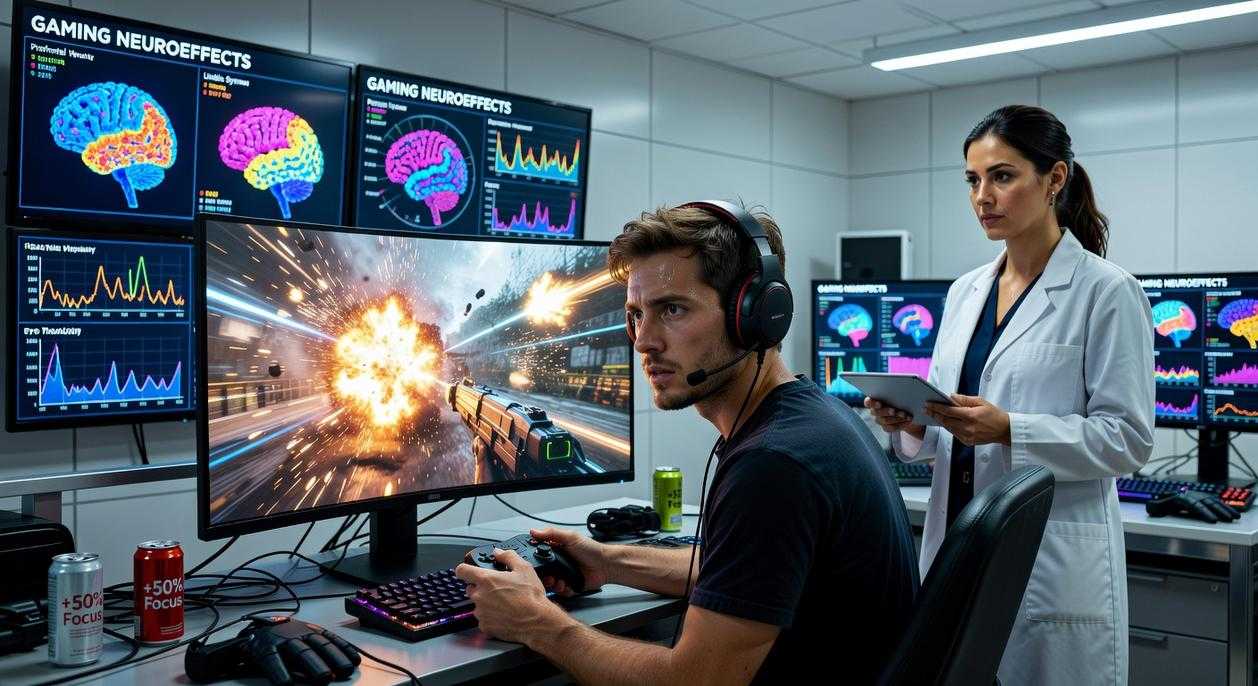
The research on how gaming affects the brain scookiegeek shows that FPS players develop better visual attention and faster reaction times than non-gamers. Your brain literally rewires itself to process information faster.
The Detective: Logic & Pattern Recognition
Puzzle games are where your brain does the heavy lifting.
Portal makes you think with portals (obviously). But what you’re really doing is spatial reasoning combined with physics prediction. You look at a room and have to figure out the sequence of moves that gets you to the exit.
The Witness takes it further. Every puzzle teaches you a new rule without telling you what it is. You have to experiment, fail, and figure out the pattern yourself.
That’s pure problem-solving. No reflexes required.
The Leader: Complex Decision-Making
Deep RPGs throw so many choices at you that your head spins.
You’re managing character stats, skill trees, equipment loadouts, and party composition. Then the game hits you with narrative choices that affect how the story plays out. Do you side with the rebels or the empire? Save the village or chase the villain?
Every decision has consequences. Sometimes you don’t see them until 20 hours later when a character you helped (or didn’t help) shows up again.
It’s decision-making practice wrapped in a fantasy setting. And honestly? It’s way more engaging than most business school case studies.
The trick is matching the genre to what you want to improve. Pick games that challenge the specific skills you’re after, and you’ll see results faster than you think.
For more on gaming strategies and updates, check out scookiegeek latest game updates by simcookie.
A Balanced Perspective: Potential Risks and Healthy Gaming Habits
Look, I need to be real with you about something.
Gaming can become a problem for some people. But before you panic, let me explain what that actually means.
Gaming disorder is real. The WHO recognized it in 2018. But here’s what most articles won’t tell you: it affects less than 3% of gamers (Przybylski et al., 2017). That’s a small minority.
High engagement doesn’t equal addiction. I play 20+ hours some weeks and I’m fine. The difference? I still show up for work, maintain relationships, and take care of myself.
Watch for these signs though: gaming when you know you shouldn’t, lying about how much you play, or choosing games over things that used to matter to you. If that sounds familiar, it might be time to reassess.
Now let’s talk about how gaming affects the brain scookiegeek style, because the attention thing is complicated.
Yes, gaming can sharpen certain focus skills. But sitting in a raid for four hours straight? That can make boring real-world tasks feel impossible afterward. Your brain gets used to constant stimulation.
Here’s what actually works for me:
The 20-20-20 rule. Every 20 minutes, look at something 20 feet away for 20 seconds. Your eyes will thank you.
Set actual time limits. I use my phone timer. When it goes off, I finish the match and step away.
Sleep matters more than that next rank. Period. This connects directly to what I discuss in Scookiegeek New Gaming Hacks From Simcookie.
Mix in other stuff. Go outside sometimes (I know, wild concept).
You get better performance and longer gaming years when you take care of yourself. That’s the real win. By prioritizing your health and well-being, you can truly enjoy the immersive worlds of gaming, enhanced even further by the Scookiegeek Latest Game Updates by Simcookie that keep your adventures fresh and exciting. By embracing a healthier lifestyle, you not only enhance your gaming performance but also immerse yourself in the excitement of new adventures, especially with the Scookiegeek Latest Game Updates by Simcookie that continuously enrich your gaming experience.
Gaming as a Tool for Cognitive Fitness
You wanted to know how gaming affects the brain scookiegeek.
Here’s the truth: it’s not a simple yes or no answer.
The relationship between gaming and cognitive function is complex. But when you approach it with intention, the effects are largely positive.
Video games work like any other form of mental exercise. They sharpen specific skills depending on what you play and how you play it.
Strategy games build your planning abilities. Fast-paced shooters improve your reaction time. Puzzle games strengthen your problem-solving muscles.
The solution is straightforward. Choose the right genres for the skills you want to develop. Practice mindful gaming habits instead of just zoning out.
When you do this, you’re not just playing. You’re actively training your brain to perform better.
Take a look at your own gaming library right now. Think about what cognitive skills you’re unknowingly training every time you boot up your favorite title.
Then ask yourself: how can I play more intentionally?
Your hobby can be more than entertainment. It can be a tool that makes you sharper.
 Founder & Chief Visionary Officer
Neylora Vassorin has opinions about gamer gear optimization tips. Informed ones, backed by real experience — but opinions nonetheless, and they doesn't try to disguise them as neutral observation. They thinks a lot of what gets written about Gamer Gear Optimization Tips, Esports and Player Perspectives, Geek-Level Gaming Strategies is either too cautious to be useful or too confident to be credible, and they's work tends to sit deliberately in the space between those two failure modes.
Reading Neylora's pieces, you get the sense of someone who has thought about this stuff seriously and arrived at actual conclusions — not just collected a range of perspectives and declined to pick one. That can be uncomfortable when they lands on something you disagree with. It's also why the writing is worth engaging with. Neylora isn't interested in telling people what they want to hear. They is interested in telling them what they actually thinks, with enough reasoning behind it that you can push back if you want to. That kind of intellectual honesty is rarer than it should be.
What Neylora is best at is the moment when a familiar topic reveals something unexpected — when the conventional wisdom turns out to be slightly off, or when a small shift in framing changes everything. They finds those moments consistently, which is why they's work tends to generate real discussion rather than just passive agreement.
Founder & Chief Visionary Officer
Neylora Vassorin has opinions about gamer gear optimization tips. Informed ones, backed by real experience — but opinions nonetheless, and they doesn't try to disguise them as neutral observation. They thinks a lot of what gets written about Gamer Gear Optimization Tips, Esports and Player Perspectives, Geek-Level Gaming Strategies is either too cautious to be useful or too confident to be credible, and they's work tends to sit deliberately in the space between those two failure modes.
Reading Neylora's pieces, you get the sense of someone who has thought about this stuff seriously and arrived at actual conclusions — not just collected a range of perspectives and declined to pick one. That can be uncomfortable when they lands on something you disagree with. It's also why the writing is worth engaging with. Neylora isn't interested in telling people what they want to hear. They is interested in telling them what they actually thinks, with enough reasoning behind it that you can push back if you want to. That kind of intellectual honesty is rarer than it should be.
What Neylora is best at is the moment when a familiar topic reveals something unexpected — when the conventional wisdom turns out to be slightly off, or when a small shift in framing changes everything. They finds those moments consistently, which is why they's work tends to generate real discussion rather than just passive agreement.